A decrepit wastewater liftstation is located in a municipality. The pumps are coming to the expiration date of their service life, and the controls require modernization and the access hatch is deteriorating. But the concrete wet well remains structurally sound.
Should the station be completely demolished? Not necessarily. The more useful question is whether the infrastructure in place is able to support a modern pumping system with no compromise in reliability, maintenance access and capacity.
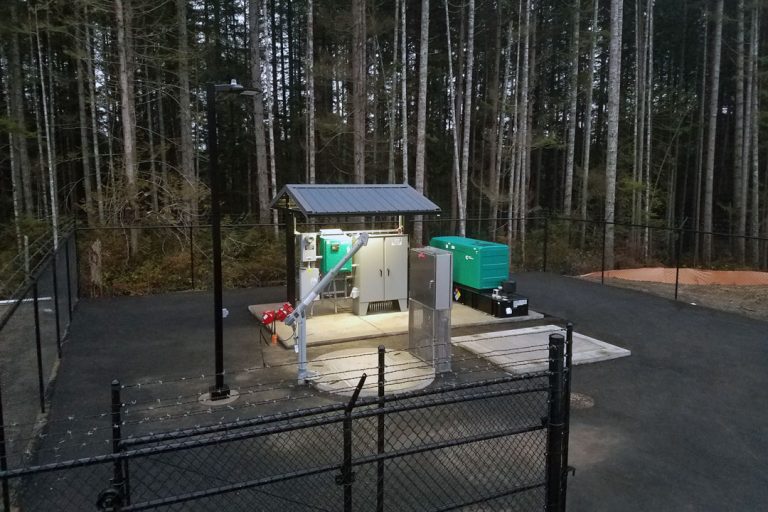
Image credit: romtecutilities.com
The retrofitting of a pumping station that is meticulously designed could save valuable infrastructure, while also replacing components that no longer meet operational requirements.
Start with the Structures That Nobody Wants To Replace
It’s costly and inconvenient to replace the wet well since it is submerged in the ground, linked to pipes and essential for the collection of wastewater.
If the concrete structure remains serviceable, retaining it may decrease excavation and construction work.
However, the deterioration of the access hatch may complicate the process. Romtec Utilities identifies wet well hatch replacement as an usual retrofit requirement. Instead of gluing a hatch to cement that is deteriorating replacing the whole top layer might be more durable. This could increase the accessibility to the structure as well as prolong its lifespan, without needing to completely rebuild the wet well.
A Powerful Pump Changes the Engineering
Take a look at a neighborhood that has experienced significant increase in population since the construction of the lift station. It’s possible that the pumping system is no longer capable of handling the increased wastewater flow.
A station’s upgrade may require higher horsepower pumps, but the selection of equipment is not independent of the system in which it is located. Pumps with higher horsepower may require adjustments to the discharge elbows and pipes as well as electronic controls, valves and other components.
The engineers should also take into consideration the hydraulic requirements of the system, such as the rate of flow as well as dynamic head total. A larger pump without evaluating the situation could cause more problems than it solves. The planning of future capacity at the initial design can allow for later expansion much more easily.
Check that the waste water is flowing throughout construction
Retrofitting a wastewater pump station creates a challenge that regular equipment replacement projects may not have to face: the pump station may require operation during construction.
Even when contractors are busy the wastewater still flows in. Depending on the scope of the project temporary bypass pumps might be required to keep operation during the removal and installation of existing equipment.
Romtec Utilities tackled this type of problem in the Federal Law Enforcement Training Center located in Brunswick, Georgia.
The work involved replacing two old wastewater lift stations as well as maintaining the operation of the facility. The project was able to accommodate the footprints of existing stations as well operating requirements using site-specific engineering and system for replacement that is packaged. This is a good example of the reasons why the sequence of construction must be considered carefully prior to installation.
In the event that replacement is not an option, it’s the best alternative
Not every station can be rehabilitated. A severely deteriorated wet well, inadequate structural capacity, or major changes in hydraulic requirements may make sewer lift station replacement more appropriate than modifying the existing installation.
It is important that the decision taken takes into consideration structural conditions along with equipment compatibility, accessibility to construction as well longer-term operational requirements. Romtec Utilities begins retrofits and replacements by identifying components which are expected to stay and those which need replacement.
The company can then design engineering solutions tailored to the location, initial plans as well as budget estimations. Prefabricated components also aid in facilitate installation and cut down on building requirements that are required on-site.
The Project is not Complete When the Pumps Are In Place
Modern lift stations should be operated as an integrated system. Before returning a lift-station to normal service, restart tests, commissioning and testing of equipment is required to ensure that all pumps, control systems, and the related equipment function in accordance with the specifications.
The manuals as well as the training of operators are equally important. Maintenance workers must be aware of the latest equipment, operating procedure, and documents before they can assume responsibility for the station.
Retrofitting infrastructure successfully preserves its value, while also eliminating the limitations that prompted modernization.
Municipalities and facility owners must think beyond repairs that are immediate. The most successful project is one that integrates the new equipment with existing structures, provides essential service throughout construction and also prepares the pumping system to last for years of continued operation.