Banking technology has helped automate a great deal of bookkeeping however anyone working with financial records understands that it’s not perfect. If the feeds from banks aren’t functioning properly, and the historical transactions may be not available and clients could still send statements in PDF format. It is necessary to convert a document that was designed to be read into data that accounting software actually uses.
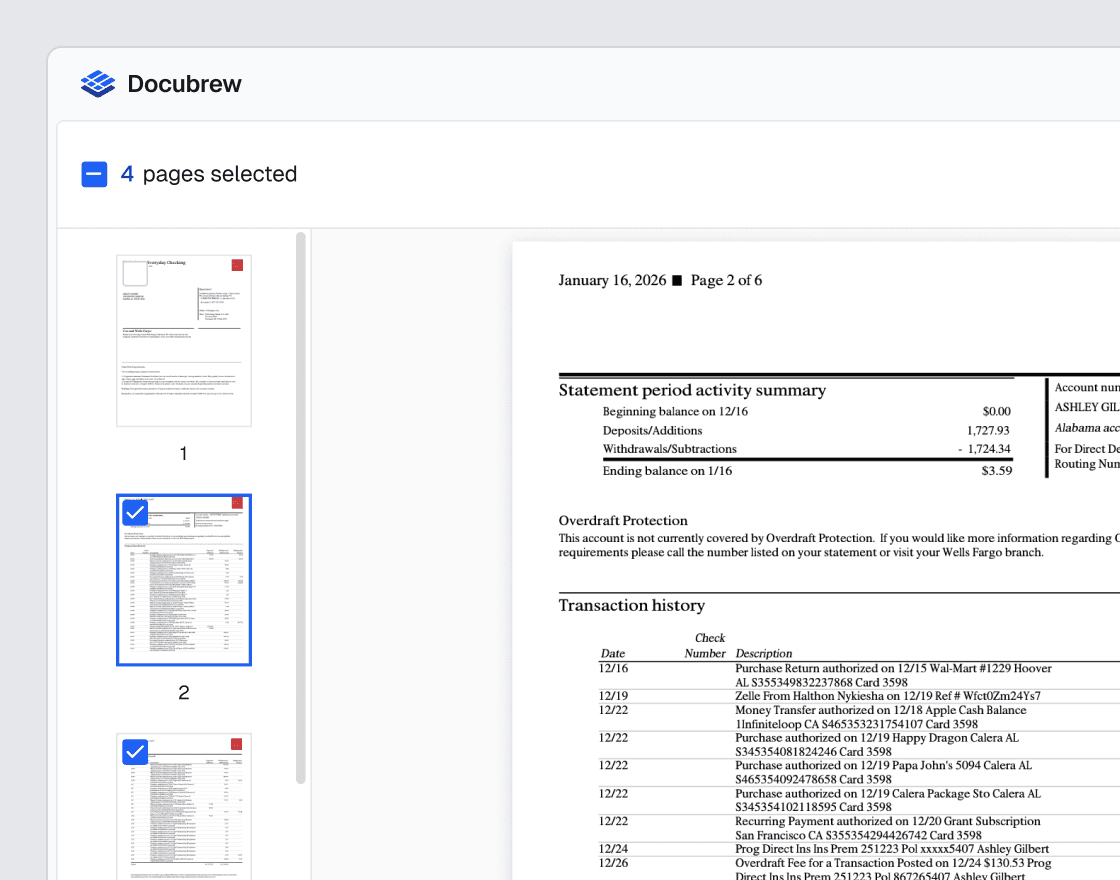
Image credit: docubrew.com
A bank statement converter can eliminate much of the repetitive work involved in that process. Docubrew converts bank statements into spreadsheet-ready information instead of manually entering date, description, withdrawals and deposits row by line.
When a PDF becomes the missing piece
Imagine a bookkeeper making the year-end reconciliation for the first customer. The accounting system has recently completed transactions but some months are missing. The client had downloaded the original PDF statements.
It was once a process of many hours of grueling copying the spread sheet. The bank statement in PDF format to Excel workflow is a practical alternative. Docubrew can extract transaction information from digital PDFs, as well as scan bank statements printed on paper.
Reduced manual transcription is an excellent way to decrease the chance of errors for professionals who need to transfer bank statements into Excel frequently.
Make sure you keep the pages that Actually Relevant
Bank statements are not exclusively of transactions. A 12-page report could contain the cover sheet, account summary, disclosures, or notices and pages of actual banking activity.
Docubrew lets users preview the document, and then select the appropriate pages prior to conversion. It is easier to convert bank statements accounts to Excel because the irrelevant contents of the document are not included in your data set.
The resulting file can be utilized in conjunction with accounting platforms such as QuickBooks, Xero and FreshBooks.
CSV Offers a Flexible Accounting Workflow
CSV remains popular because spreadsheets as well as databases and accounting software allow it. If you need an account statement converted to CSV, Docubrew produces structured output based upon the transaction table found in the statement.
The same workflow can be used to convert bank statements to CSV for a variety of reasons, such as reconstructing the past, starting the task of cleaning up clients’ data that has not been used, researching any missing transactions or creating the data for reconciliation.
Accounting firms who need to handle clients with multiple statements may use batch processing to their advantage.
Financial Documents Should Be viewed with a keen eye for privacy Controls
The convenience factor isn’t the only one to consider when processing financial records. Bank statements can contain sensitive client data Bookkeepers and accountants are also concerned about where the processing is taking place.
Docubrew uses two different methods. Windows desktop software converts files locally, on the PC of the user. People who prefer to work with browsers can choose the encrypted cloud version which allows uploaded files to be instantly deleted within 24 hours.
The choice of this platform is different from bank statement to Excel software that relies solely on remote processing.
Turning Document Archives Back Into Working Data
The PDF statement can be a useful document, but it’s not ideal should you need to reconcile, sort filters, sort, or import transactions in other systems. Scanned files create an additional complication, as the information about transactions is usually only available as images.
Docubrew is a solution that combines statement parsing and OCR for documents that have been scanned. It gives accountants, bookkeepers, and businesspeople easy method to convert archival financial documentation into actionable transactional data.
The result is a straightforward improvement to an already tedious process: use the bank statement as the initial financial record and then turn its transaction table into data you can actually work with.